
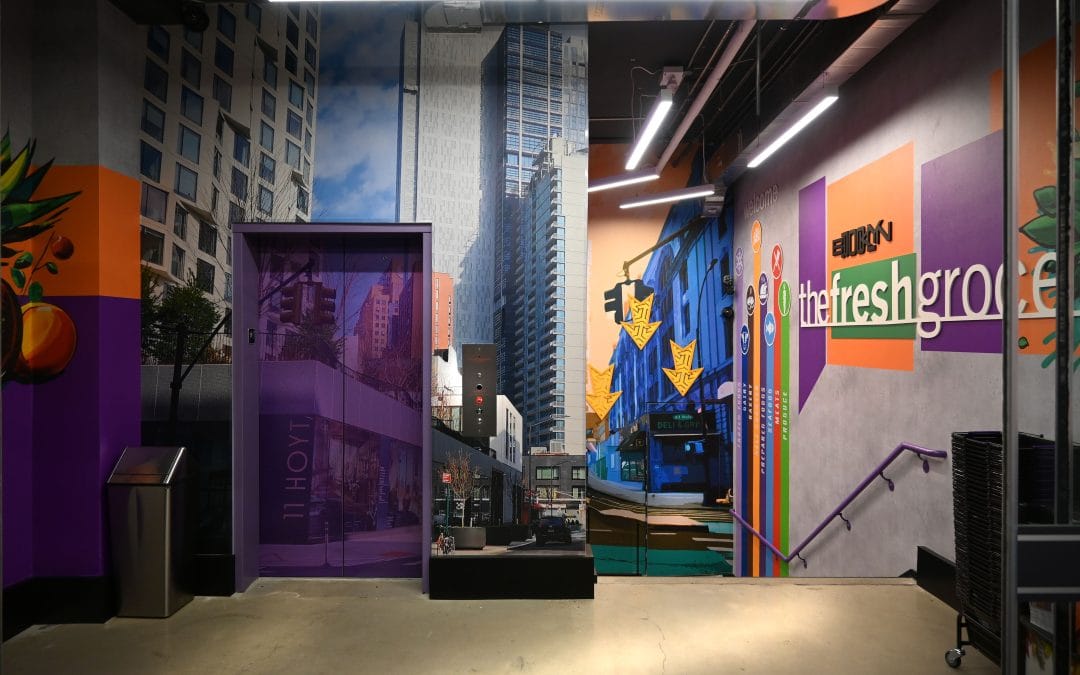
When planning a new grocery store or supermarket remodel, one of the biggest design decisions is how much of the space should be customized. Should your store have a completely unique identity built around your customers and community, or should you follow the more standardized design approach commonly used by large grocery chains?
The answer isn’t as simple as custom vs. chain.
Both approaches have advantages. Standardized grocery store design can make stores easier to replicate, maintain, and scale. Custom grocery store design gives retailers more freedom to create an environment around their specific customers, merchandising strategy, brand, and local market.
For many independent grocers and regional supermarket chains, the strongest approach falls somewhere in the middle: standardize what makes the business more efficient and customize what makes the customer experience better.
At Broden Design Group, decades of supermarket design experience have shown us that the most successful grocery environments aren’t necessarily the ones following the latest design formula. They’re the ones designed around how that particular supermarket needs to look, operate, merchandise, and grow.
Key Takeaways
- Custom grocery store design allows retailers to build layouts, departments, signage, fixtures, and branding around their specific customers and market.
- Standardized chain design can improve consistency, simplify maintenance, and make expansion into additional locations easier.
- Independent and regional grocers can use local identity and community connections to differentiate themselves from national competitors.
- Grocery chains don’t need every store to look identical. A scalable prototype can maintain brand consistency while allowing individual locations to adapt.
- Customization is most effective when it supports a business goal such as improving navigation, showcasing fresh foods, growing prepared-food sales, or strengthening brand recognition.
- Grocery store design should ultimately balance customer experience, merchandising, operations, scalability, and cost.
Custom vs. Chain Grocery Store Design at a Glance
| Design Consideration | Custom Grocery Store Design | Standardized Chain Design |
|---|---|---|
| Brand identity | Highly tailored | Highly consistent |
| Local relevance | Strong opportunity | More limited unless adapted |
| Scalability | Requires planning | Easier to replicate |
| Store layout | Can respond to individual market | Often follows established prototype |
| Customer experience | Highly customizable | Familiar across locations |
| Fixtures & signage | Can be custom fabricated | Often standardized |
| Maintenance | May require specialized components | Easier to reproduce |
| Best suited for | Independents, regional grocers, flagships, remodels | Large chains and multi-location rollouts |
| Ideal strategy | Customize strategically | Standardize strategically |
The important thing is that neither column automatically represents “better” grocery store design.
The right answer depends on the business.
Why Custom Grocery Store Design Can Create a Competitive Advantage
Independent supermarkets and regional grocery chains have an advantage that can be difficult for a national retailer to replicate: they often know their communities extremely well.
Custom supermarket design gives owners an opportunity to translate that knowledge into the physical store.
A supermarket known for fresh foods may want produce, meat, seafood, and bakery to become major visual destinations. A store with a successful prepared-food program might need the department to feel more like a restaurant or food hall than another supermarket aisle. An urban market may need to prioritize convenience and grab-and-go shopping, while a suburban supermarket serving larger households may be designed around bigger weekly shopping trips.
Even two locations operating under the same grocery brand may have different customer needs.
Custom design allows retailers to consider factors such as:
- Customer demographics and shopping habits
- Store size and building configuration
- Fresh and prepared-food strategy
- High-performing product categories
- Department adjacencies
- Customer traffic patterns
- Local competition
- Brand positioning
- Checkout and convenience needs
- Community identity and history
Those insights can influence everything from the floor plan to the materials used on a department sign.
The goal isn’t to make the store different simply so it looks custom. It’s to make intentional differences where they can improve the shopping experience or support the business.
Where Standardized Chain Grocery Design Works Well
There’s a reason major supermarket chains don’t redesign every location from scratch.
Consistency creates efficiency.
When a grocery company already knows which fixtures, materials, signage systems, department identities, and design elements work, those standards can make new locations and remodels easier to execute.
Standardization can also make maintenance simpler. If 30 locations use the same fixture system or signage family, replacement components can be easier to reproduce. Store teams become familiar with the environment, while customers who visit multiple locations recognize the brand immediately.
For growing grocery chains, some of the elements worth standardizing include:
- Core brand colors and typography
- Logo usage
- Primary department signage
- Fixture families
- Material palettes
- Wayfinding systems
- Promotional signage standards
- Brand voice and messaging
- Repeatable fabrication specifications
But consistency doesn’t have to mean every location looks identical.
That’s where grocery store prototype design becomes important.
Instead of creating one store and copying it repeatedly, retailers can develop a flexible design system that establishes the brand’s visual rules while allowing individual locations to respond to their building, demographics, merchandising needs, and community.
A 60,000-square-foot suburban supermarket shouldn’t necessarily function exactly like a smaller urban grocery store just because the logo above the entrance is the same.
The Best Approach Often Combines Customization and Consistency
For many regional and growing grocery businesses, the strongest strategy isn’t choosing one side.
It’s creating a recognizable brand framework with room for customization.
Think of it as establishing the parts of the supermarket that should remain consistent and identifying the areas where flexibility creates value.
A retailer might maintain the same overall visual identity, typography, signage family, and fixture style across every location while allowing individual stores to customize:
- Local photography and graphics
- Community storytelling
- Department size and placement
- Prepared-food concepts
- Specialty food areas
- Fresh department presentation
- Promotional zones
- Seasonal merchandising
- Store-specific wayfinding
- Architectural details
This allows customers to immediately recognize the grocery brand without feeling like they’ve entered the exact same store in another ZIP code.
And for independent and regional grocers, local identity can be especially powerful.
A supermarket can incorporate neighborhood photography, historic references, local architecture, regional foods, community landmarks, or other subtle design elements that create a stronger sense of place.
Broden used this strategy at ShopRite of Brookfield in Connecticut, where the finished environment combines contemporary supermarket design with the history of Cingari Family Markets and characteristics of the surrounding community.
That’s a difficult experience for a generic supermarket prototype to replicate.
Where Should Grocery Stores Invest in Custom Design?
Not every inch of a supermarket needs a custom treatment.
In fact, trying to customize everything can create unnecessary cost and visual clutter.
The better strategy is identifying the areas where design has the greatest opportunity to influence customer perception, navigation, merchandising, or sales.
Fresh Departments
Produce, bakery, meat, seafood, deli, and other fresh departments are often major indicators of perceived supermarket quality.
Custom lighting, department signage, fixtures, finishes, displays, and architectural features can help these areas stand apart from center-store grocery.
Prepared Foods
Prepared foods are becoming increasingly important as supermarkets compete with restaurants, takeout, convenience stores, and delivery.
Rather than treating prepared foods like another grocery department, custom design can create a stronger destination through service counters, menu boards, lighting, seating, grab-and-go merchandising, and restaurant-inspired visual identities.
Entrances and First Impressions
The entrance establishes expectations for the rest of the shopping experience.
A strong entrance can communicate freshness, quality, value, local identity, or brand personality before the customer reaches the first aisle.
Signage and Wayfinding
Good supermarket signage does more than label departments.
It helps customers understand the store.
FMI’s grocery shopper research has consistently demonstrated the importance consumers place on easy shopping experiences and being able to find departments and products efficiently.
Custom wayfinding can combine those functional needs with the retailer’s visual identity.
Local Storytelling
This is one area where regional and independent grocers can particularly stand out.
Instead of filling walls with generic food photography, stores can use imagery, typography, murals, historical references, and storytelling that connects the supermarket to its actual community.
High-Value Merchandising Areas
Endcaps, promotional areas, seasonal zones, specialty departments, and other high-traffic locations deserve special attention because they create valuable opportunities for product discovery.
Custom doesn’t necessarily mean expensive.
It means intentional.
What About the Cost of Custom Supermarket Design?
One misconception is that custom grocery store design automatically means spending significantly more money.
It can — if customization isn’t managed strategically.
But experienced supermarket designers can help owners determine where custom elements justify the investment and where standardized solutions make more sense.
For example, an owner may decide to invest more heavily in the produce entrance, prepared-food environment, department signage, and customer-facing fresh areas while using simpler repeatable solutions throughout center store.
Custom fabrication can also help create elements specifically for the environment rather than forcing generic retail components into a space where they don’t quite work.
The bigger consideration should be value rather than simply upfront price.
Ask questions such as:
- Will this improve the customer experience?
- Will it make an important department more visible?
- Could it create better merchandising opportunities?
- Does it strengthen our brand?
- Can it withstand a high-traffic grocery environment?
- Can it be reproduced if we expand?
- Will it still work several years from now?
If the answer is no, customization may not be necessary.
How Grocery Store Design Can Support Sales
Whether the store is highly customized or based on an established prototype, supermarket design should ultimately support business performance.
Layout influences what customers see. Department placement affects traffic. Sightlines determine which destinations attract attention. Signage influences navigation. Fixtures affect merchandising flexibility.
Even relatively small design decisions can change how customers experience products.
For example, placing complementary categories near one another can support cross-merchandising. Giving prepared foods greater visibility can help position the supermarket as a meal destination. Better wayfinding can reduce frustration while still exposing shoppers to additional products.
The goal shouldn’t be to deliberately make customers wander through a confusing store in hopes they’ll buy more.
Today’s consumers increasingly value convenience.
The better strategy is creating an environment that’s easy to shop while providing relevant opportunities for discovery along the way.
That’s where supermarket design moves beyond aesthetics and becomes part of the retailer’s merchandising strategy.
When Should You Consider Custom Grocery Store Design?
There are certain projects where taking a more customized approach can be particularly valuable.
Consider working with a supermarket design specialist when you’re:
- Opening a new independent grocery store
- Remodeling an outdated supermarket
- Rebranding an existing grocery business
- Developing a flagship location
- Expanding into a new demographic market
- Growing prepared foods or fresh departments
- Facing increased competition
- Acquiring and converting existing stores
- Developing a supermarket prototype
- Expanding a regional grocery chain
- Trying to create more consistency across multiple locations
In many of these situations, the goal isn’t simply to make the supermarket look newer.
It’s to rethink how the store works.
Why Specialized Supermarket Design Experience Matters
Supermarkets aren’t ordinary retail environments.
They combine high customer traffic, refrigeration, perishables, foodservice, constant restocking, shopping carts, changing promotions, fresh departments, checkout queues, digital technology, signage, and thousands of individual products.
A design concept has to survive all of that.
That’s why supermarket design experience matters.
Broden Design Group has more than 36 years of retail design experience and works with independent grocers, regional supermarket chains, national brands, specialty food markets, and other retail environments.
More importantly, Broden’s work doesn’t stop with a rendering.
The team brings together supermarket design, graphic design, custom fabrication, signage, fixtures, décor, and installation so that the people designing the environment understand how it will ultimately need to be manufactured and installed.
That can help bridge a common gap in retail projects:
The difference between something that looks impressive on a screen and something that actually works inside a busy supermarket.
Custom or Chain? Design the Store Around the Business
So, which works better: custom grocery store design or standardized chain design?
For most grocery retailers, the answer is a combination.
Standardize the elements that strengthen brand recognition and make operations easier. Customize the elements that improve the customer experience, differentiate the business, or respond to the local market.
An independent supermarket shouldn’t try to look like a national chain simply because large retailers have more locations. And a growing grocery chain shouldn’t redesign every location from scratch simply to make each store unique. The strongest strategy sits between those extremes.
Create a recognizable brand. Build a flexible system. Understand the customer. Identify the departments and experiences that matter most. Then use design strategically.
At Broden Design Group, that’s where the process begins: understanding what the supermarket needs to accomplish before deciding what it should look like. If you’re planning a supermarket remodel, developing a new grocery store, or creating a design program that needs to work across multiple locations, Broden can help take the project from strategy and concept through fabrication and installation.
Because the goal isn’t simply to create a custom store. It’s to create the right store.
Frequently Asked Questions About Custom Grocery Store Design
What is custom grocery store design?
Custom grocery store design creates the layout, signage, fixtures, materials, graphics, branding, and customer experience around the specific supermarket rather than relying entirely on a preexisting template. The design can account for customer demographics, product mix, building constraints, merchandising strategy, and local identity.
Is custom grocery store design better than chain store design?
Neither approach is universally better. Custom design provides greater flexibility and differentiation, while standardized chain design can improve consistency, scalability, and operational efficiency. Many successful grocery retailers combine standardized brand elements with customized store experiences.
How much of a supermarket should be customized?
Focus customization on areas where it can create meaningful value. Entrances, fresh departments, prepared foods, signage, wayfinding, specialty departments, promotional zones, and local storytelling are often strong candidates. More functional areas can use repeatable systems to control costs and improve consistency.
Can custom grocery store design help increase sales?
Strategic grocery store design can improve product visibility, traffic flow, cross-merchandising opportunities, department awareness, and product discovery. These factors can support sales, although design alone does not guarantee increased revenue.
How can a regional grocery chain keep stores consistent without making them identical?
Develop a flexible supermarket prototype. Standardize core brand elements such as typography, colors, signage systems, fixture families, and materials while allowing layouts, local graphics, department emphasis, and merchandising areas to adapt to individual markets.
Is custom supermarket design only for independent grocery stores?
No. Regional and national grocery chains can also use custom design for flagship locations, new concepts, acquired stores, market-specific locations, or prototype development.
What does a supermarket design company do?
A specialized supermarket design company can assist with store layouts, customer flow, interior and exterior design, branding, signage, wayfinding, department identities, fixtures, fabrication, and implementation. Broden combines these capabilities through an integrated design, fabrication, and installation process.
Does Broden Design Group work with multi-location grocery chains?
Yes. Broden works with individual supermarket locations as well as multi-location retail programs. The team can develop repeatable design systems and fabricated elements while adapting individual locations to different footprints and market needs.