
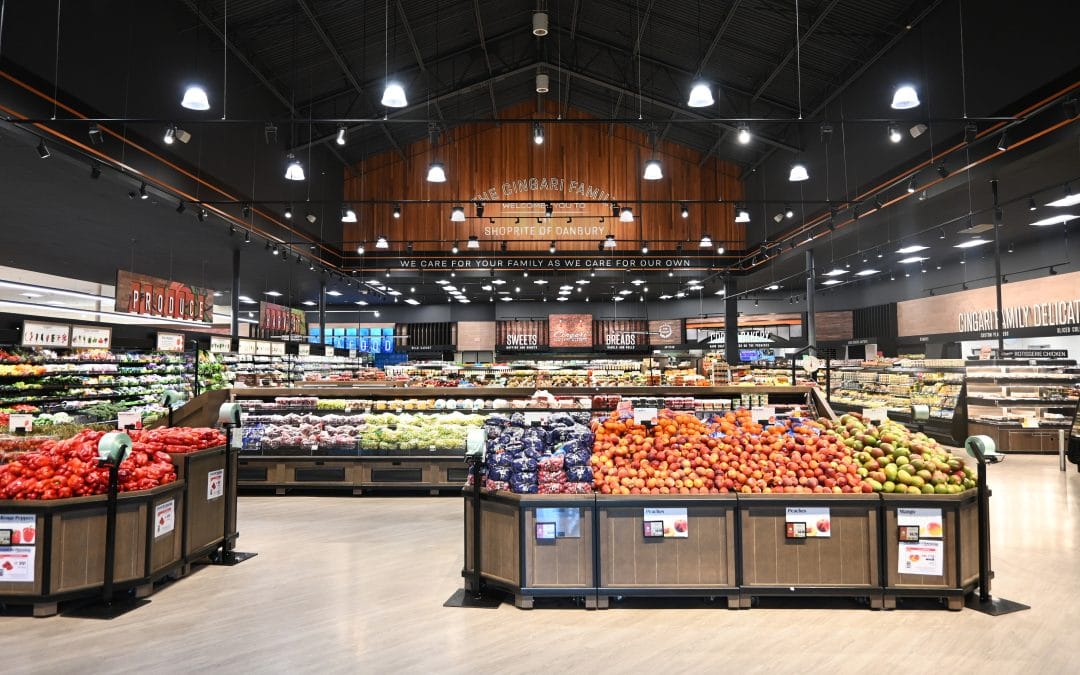
Supermarket design trends for 2027 are about much more than choosing the right colors, finishes, or signage.
The grocery store itself is becoming a competitive advantage.
Today’s shoppers can have groceries delivered to their door, reorder staples from an app, compare prices from their phones, or visit a growing number of specialty and value-focused competitors. That means the physical supermarket has to give customers a reason to walk through the doors — and make the experience easy, engaging, and worth repeating once they arrive.
For supermarket owners planning a new store or grocery remodel in 2027, successful design will increasingly combine customer experience, merchandising strategy, convenience, technology, local identity, and operational efficiency.
At Broden Design Group, we’ve spent more than 36 years helping supermarket owners transform those ideas into physical retail environments through an integrated design, fabrication, and installation process.
Here are the supermarket design trends we believe will matter most in 2027 — and how grocers can translate them into stores designed to perform.
Key Takeaways
- Supermarket design in 2027 will increasingly prioritize shopper experience, intuitive navigation, convenience, and merchandising performance.
- Fresh foods and prepared-meal departments will continue evolving into visually distinct destinations within the store.
- Digital technology will become more integrated into physical supermarket design rather than added as an afterthought.
- Clear signage and wayfinding remain critical as shoppers demand faster, easier store experiences.
- Local storytelling and differentiated brand environments can help independent and regional supermarkets compete with national chains.
- Flexible merchandising spaces will allow stores to respond faster to seasons, promotions, product trends, and changing consumer behavior.
- The strongest supermarket designs connect aesthetics to measurable business goals such as product visibility, customer flow, dwell time, and sales opportunities.
1. Fresh Departments Become the Visual Centerpiece
Produce isn’t just another department anymore.
For many modern supermarkets, fresh food establishes the shopper’s first impression of the entire store.
FMI’s 2026 grocery shopper research found that 69% of in-store shoppers value being able to examine produce up close.
In 2027, expect supermarket interior design to continue emphasizing produce, bakery, meat, seafood, deli, and other fresh departments through lighting, materials, signage, displays, and intentional department transitions.
The goal is to communicate freshness before a shopper ever picks up a product.
Broden’s supermarket design philosophy already incorporates this thinking, using fresh departments strategically within store layouts to influence perception and encourage additional product discovery.
2. Prepared Foods Will Feel More Like Restaurants
One of the biggest opportunities in grocery design is the continuing evolution from “buy ingredients here” to “solve dinner here.”
Hot foods, grab-and-go meals, sushi, bakery cafés, prepared entrées, and ready-to-eat offerings give supermarkets opportunities to compete for spending that might otherwise go to restaurants or takeout.
And the environment needs to communicate that shift.
Rather than treating prepared foods as another refrigerated case against a wall, 2027 grocery store designs can create dedicated destinations using warmer materials, specialized lighting, menu boards, service counters, seating, and stronger department identities.
Broden has already brought this concept into real stores. At ShopRite of Brookdale in New Jersey, the design incorporated ShopRite’s “Fresh to Table” concept as a store-within-a-store environment for fresh ready-made meals.
The takeaway for supermarket owners is simple:
Don’t merchandise tonight’s dinner like another grocery SKU.
Create a destination around it.
3. Easier Navigation Becomes a Competitive Advantage
Sometimes the best supermarket design trend isn’t flashy at all.
It’s making the store easier to shop.
FMI’s 2026 research found that 69% of grocery shoppers value an easy shopping experience, while the same percentage value being able to find aisles and departments easily.
That puts renewed importance on grocery store wayfinding.
In 2027, expect stronger use of department identification, sightlines, aisle markers, architectural cues, typography, color, and strategically positioned signage.
Good wayfinding doesn’t simply tell shoppers where the dairy department is.
It reduces friction.
And when signage is integrated into the overall supermarket interior design rather than added afterward, it can guide customers while reinforcing the store’s identity.
Broden incorporates signage and wayfinding directly into its supermarket design process, using these systems to improve visibility, guide traffic, highlight departments, and strengthen branding.
4. Technology Will Become Part of the Store Design
Digital and physical grocery shopping aren’t separate experiences anymore.
FMI reports that 77% of grocery shoppers are digitally engaged before shopping and 71% are digitally engaged while they’re actually grocery shopping. Retailer apps are used by 54% of shoppers during the shopping process.
That has major implications for supermarket design in 2027.
Stores need to anticipate digital behaviors rather than forcing technology into spaces that weren’t designed for it.
That can mean thoughtfully integrating digital signage, self-checkout, digital menu boards, promotional screens, app-related touchpoints, electronic information, and other technology into the physical environment.
BCG also argues that changing technology economics and AI capabilities are making in-store grocery technology an increasingly significant opportunity for retailers.
The key word, though, is integrated. A screen bolted onto a wall isn’t a technology strategy. The strongest stores will determine where technology genuinely improves the shopper journey and design the physical environment around it.
5. The Grocery Store Becomes a Media Platform
Here’s a trend supermarket owners should be watching closely.
Physical stores are increasingly becoming media environments.
High-traffic areas, department entrances, displays, checkout zones, and other shopper touchpoints can potentially serve both merchandising and advertising functions.
Industry analysis looking toward 2027 describes the physical grocery store as evolving beyond a transaction space into a media channel, experience platform, and potential source of incremental revenue.
That doesn’t mean covering every available surface with advertising. Quite the opposite.
The opportunity is to intentionally design locations where promotions, brand storytelling, retail-media messaging, and merchandising naturally belong.
A supermarket designed for this from the beginning will look very different from one where screens and promotional signage are continuously added wherever space happens to exist.
6. Local Identity Will Matter More, Not Less
As grocery chains adopt similar technology and convenience features, physical identity becomes an important differentiator.
Independent grocers and regional supermarket groups have something national competitors often struggle to manufacture: A genuine connection to their communities.
In 2027, expect more supermarket designs to lean into local storytelling through photography, typography, murals, historical references, neighborhood imagery, regional materials, and custom department identities.
Broden has already used this strategy across supermarket projects.
Its ShopRite of Brookfield renovation combines contemporary design with the Cingari Family Markets story and the individuality of the surrounding Connecticut community.
At ShopRite of Roxborough in Philadelphia, Broden used AI-informed demographic insights alongside its team’s design experience to help shape a locally relevant environment.
The future supermarket shouldn’t look like it could exist anywhere.
It should feel like it belongs exactly where it is.
7. Flexible Merchandising Will Replace Static Thinking
Grocery retail changes constantly. Seasonal products arrive. Promotions change. New categories emerge. Prepared-food concepts expand. Consumer preferences shift.
A supermarket designed too rigidly can quickly become difficult or expensive to adapt. That’s why flexibility should become a larger part of grocery store design and fixture planning in 2027.
Modular displays, adaptable merchandising zones, flexible signage systems, and multi-purpose promotional spaces can give operators more freedom to change the environment without redesigning the store every time the merchandising strategy changes.
The best question isn’t only: “What does this department need today?” It’s: “What might we need this space to do three years from now?”
8. Cleaner Design Can Make Products Work Harder
More decoration isn’t necessarily better design.
In 2027, expect supermarkets to continue moving toward intentional visual hierarchy — giving departments and products enough room to command attention rather than making every surface compete for it.
Broden’s ShopRite of Fair Lawn project offers a real-world example. The store uses simple geometric forms and typography to create an open, contemporary, uncluttered environment. Broden also highlighted sushi near the front of the department lineup, which the company reports resulted in a significant sales boost.
That’s supermarket design doing its job.
Not decoration for decoration’s sake.
Strategic design should help shoppers notice what retailers want them to notice.
9. Convenience Will Influence the Entire Floor Plan
“Convenience” used to mean having a supermarket nearby.
Now it means making the entire trip easier.
That includes intuitive entrances, faster product discovery, grab-and-go access, logical department adjacencies, efficient checkout, and layouts that work for both larger stock-up trips and quick meal runs.
The supermarket floor plan of 2027 should account for different missions happening inside the same building. One customer may be doing a $200 weekly grocery trip. Another wants sushi and a drink in five minutes. Both need the store to work.
That’s why customer journey mapping, traffic-flow planning, department adjacency, and sales-driven zoning should be part of supermarket design from the earliest planning stages. Broden specifically incorporates those considerations into its layout strategy.
10. Sustainability Moves From Trend to Design Requirement
Sustainable supermarket design isn’t just about how a store looks. It intersects with materials, refrigeration, lighting, energy use, durability, maintenance, and waste.
For 2027 supermarket remodels and new-store designs, owners should increasingly consider lifecycle performance when evaluating materials and design decisions.
A finish that looks beautiful but needs frequent replacement isn’t necessarily the better design decision. Neither is a trendy fixture that can’t withstand the realities of a high-traffic grocery environment. Durability and efficiency are part of sustainable design. And they’re part of protecting the investment you’ve made in the store.
11. AI Will Speed Up Design — Without Replacing Good Design Thinking
AI will inevitably be one of the most talked-about retail design trends of 2027.
But the interesting part isn’t asking AI to make a pretty supermarket picture.
It’s using AI to make the design process smarter.
Broden is already experimenting with this through its AI Discovery Sessions, combining market intelligence, brand strategy, AI-assisted visualization, and human design expertise to help clients explore ideas and reach decisions faster.
Broden also used AI to better understand local demographics when developing the direction for its ShopRite of Roxborough project. That’s a much more useful application. AI can help accelerate exploration and visualization.
Experienced supermarket designers still have to understand whether an idea can be fabricated, installed, maintained, merchandised, and operated successfully.
The Biggest Supermarket Design Trend for 2027? Design for Performance.
Trends change. Good supermarket design principles don’t.
The most successful grocery stores of 2027 won’t necessarily be the ones with the most screens, newest finishes, or trendiest colors. They’ll be the stores where design supports the business. Customers can navigate naturally. Fresh food looks exceptional. Prepared foods feel like a destination. Promotions attract attention without creating clutter. Technology reduces friction. Local identity creates connection. And merchandising decisions are reinforced by the physical environment around them. That’s the difference between decorating a supermarket and strategically designing one.
Bring Your 2027 Supermarket Vision to Life With Broden Design Group
A supermarket remodel or new store represents a significant investment.
The challenge is turning all of these trends, technologies, merchandising strategies, and ideas into one cohesive environment that actually works.
That’s where Broden Design Group comes in.
Broden has more than 36 years of retail design experience and provides an integrated process encompassing interior and exterior design, graphic design, in-house fabrication, and installation.
Instead of designing something that another company has to figure out how to build, Broden’s team remains involved from concept through fabrication and installation.
The result is a supermarket design created with the real-world finished environment in mind from the beginning.
Whether you’re planning a new grocery store, remodeling an existing supermarket, refreshing individual departments, or developing a concept for multiple locations, Broden can help translate your business goals into a physical space designed around the way customers will shop next.
Because the best supermarket design trend isn’t something you’ll replace next year.
It’s a store that performs.
Frequently Asked Questions About Supermarket Design Trends
What are the top supermarket design trends for 2027?
Key supermarket design trends heading into 2027 include stronger fresh and prepared-food destinations, intuitive wayfinding, integrated digital technology, retail-media spaces, flexible merchandising, local storytelling, sustainable materials, convenience-focused layouts, and AI-assisted design planning.
How can supermarket design help increase sales?
Supermarket design can influence how shoppers move through a store, which departments and products they notice, how easily they shop, and where they spend time. Strategic layouts, product presentation, signage, lighting, department adjacencies, and merchandising zones can all support sales opportunities.
What should grocery store owners prioritize in a 2027 remodel?
Start with business and customer goals rather than aesthetics alone. Evaluate customer flow, fresh departments, prepared foods, checkout, wayfinding, technology, merchandising flexibility, brand identity, and operational efficiency before determining the visual design.
Are prepared foods important to modern supermarket design?
Yes. Prepared foods increasingly deserve their own identity within supermarkets. Thoughtful layouts, lighting, signage, counters, menu systems, and grab-and-go merchandising can help transform prepared foods from another department into a destination.
How is technology changing grocery store design?
Technology is increasingly being incorporated into checkout, digital signage, menus, promotions, apps, merchandising, and operational systems. Since many shoppers use digital tools before and during grocery trips, physical store design increasingly needs to accommodate digital behavior.
How is AI being used in supermarket design?
AI can assist with research, demographic insights, concept exploration, visualization, and faster design iteration. Broden combines AI capabilities with human strategy and design expertise through its AI Discovery process rather than treating AI as a replacement for professional designers.
Why hire a supermarket design specialist instead of a general retail designer?
Supermarkets have specialized requirements involving refrigeration, perishables, high traffic, department adjacencies, rapid inventory turnover, signage, merchandising, and operational flow. A supermarket design specialist understands how those requirements affect both the customer-facing environment and the feasibility of the finished design.
Does Broden Design Group fabricate and install supermarket décor?
Yes. Broden provides design, in-house fabrication, and installation. Its Denville, New Jersey operation includes a manufacturing facility, and the team plans installation as part of its integrated design-build-install process.