
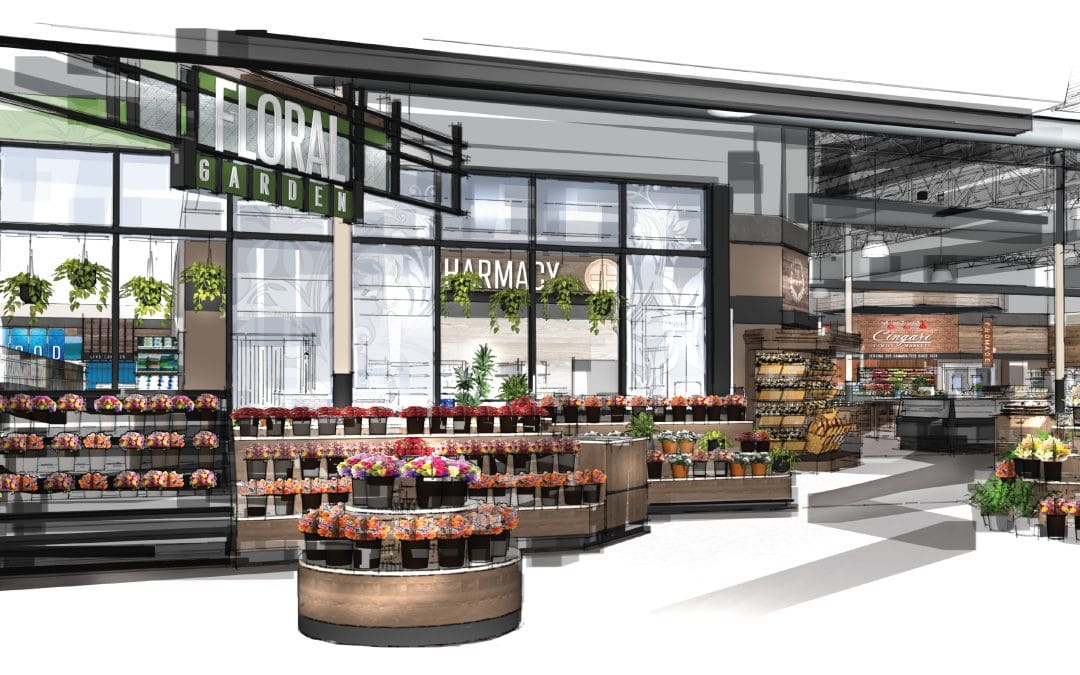
Independent grocery stores can compete with big chains through design by doing five things large competitors often struggle to execute at the local level: turning fresh departments into destinations, designing around real shopping missions, making smaller footprints easier to shop, building authentic community identity into the environment, and creating flexible merchandising spaces that respond quickly to customer demand.
That is the real opportunity behind independent grocery store design. The goal shouldn’t be to make a smaller supermarket look like a scaled-down national chain. It should be to create a grocery store experience that is more relevant to the people who actually shop there.
Big chains have scale. Independent grocers can have specificity. And in a physical retail environment, specificity can be a serious competitive advantage.
How Can Independent Grocery Stores Compete With Big Chains?
Independent grocery stores don’t necessarily need to beat national chains on store size, advertising budgets or purchasing power. They can compete by creating a better shopping experience for their specific customers.
Five grocery store design strategies can make the biggest difference:
- Make fresh departments impossible to ignore.
- Design around shopping missions instead of only product categories.
- Turn a smaller footprint into a convenience advantage.
- Build authentic local identity into the store environment.
- Create flexible merchandising spaces that can change faster than a chain prototype.
The common thread is simple: don’t design the store around what a supermarket is “supposed” to look like. Design it around why customers choose your supermarket instead of the one down the road.
1. Turn Fresh Departments Into Destinations, Not Just Departments
Walk into almost any supermarket and you’ll encounter the same basic categories: produce, meat, seafood, deli, bakery, dairy, frozen foods and center-store grocery.
The competitive difference isn’t simply having those departments. It’s what customers feel when they encounter them.
For many independent grocers, fresh food represents one of the strongest opportunities to differentiate from national chains. Produce, meat, seafood, bakery, deli and prepared foods can communicate freshness, quality and expertise in ways a row of packaged products cannot. Yet these departments are sometimes treated as functional areas rather than destinations. That’s a missed opportunity.
Design for “visual appetite”
Fresh department design should make food look desirable before customers ever pick it up.
Think about the difference between seeing produce arranged across an endless field of identical fixtures and entering a produce department with layered displays, clear sightlines, seasonal focal points and merchandising that creates a sense of abundance without looking cluttered.
The same principle applies to meat, seafood, bakery and prepared foods. A butcher counter can communicate craftsmanship. A bakery can communicate warmth and abundance. A seafood department can communicate freshness. A prepared-food area can communicate convenience and solve the “What’s for dinner?” question before a shopper ever reaches the center aisles.
This is what we think of as visual appetite: using the physical environment to make products feel more appealing, fresh and worth exploring.
Make expertise part of the environment
Independent grocers also have an advantage that can be difficult to scale across hundreds of locations: people with genuine expertise.
If your store has an experienced butcher, baker, seafood specialist or prepared-food team, don’t hide that expertise behind a generic department sign. Use the environment to tell customers what’s different.
House-made recipes, specialty cuts, fresh preparation, staff recommendations, local sourcing and seasonal offerings can all become part of the department story. The department isn’t simply selling chicken, bread or seafood. It’s selling confidence in where those products came from and who prepared them. That’s a much harder experience for a large-format competitor to replicate.
2. Design Around Shopping Missions, Not Just Grocery Categories
Traditional grocery store layouts are built primarily around product categories.
Customers, however, don’t always shop that way.
They walk into a grocery store thinking:
- What am I making for dinner tonight?
- What can I grab before soccer practice?
- What do I need for the game Sunday?
- What should I serve when everyone comes over this weekend?
- What can I bring to the office tomorrow?
Those aren’t category searches. They’re shopping missions. Independent grocers can use grocery store layout design and merchandising to solve those missions faster.
Build solutions instead of making customers assemble them
Consider a customer who wants an easy dinner. In a traditional layout, that shopper might visit the meat department, produce, center store, bakery and refrigerated section before assembling everything needed for the meal.
Now imagine a “Dinner Tonight” destination featuring prepared entrées, fresh pasta, sauces, salads, bread, sides and complementary items together. The customer isn’t merely discovering products. The store is solving dinner.
The same strategy can work for grilling season, school lunches, holiday entertaining, game day, breakfast, local events and seasonal meals. Cross-merchandising can also increase product discovery without requiring additional square footage. The key is to connect products based on how customers actually use them.
Create store-within-a-store experiences
High-value categories can go a step further by becoming distinct destinations inside the larger supermarket. A prepared-food area might have different materials, lighting, typography and fixtures than center store while still feeling connected to the overall brand.
The same strategy can work for:
- Bakery
- Specialty cheese
- Meat and seafood
- Floral
- Local products
- International foods
- Health and wellness
- Grab-and-go
- Premium or specialty categories
- Beer and wine where permitted
Broden Design Group has experience developing these types of store-within-a-store concepts, including environments built around fresh ready-made meals.
For an independent supermarket, these spaces can give customers another reason to visit beyond completing a standard grocery list.
You’re creating destinations within the destination.
3. Turn a Smaller Grocery Store Layout Into a Competitive Advantage
Large supermarkets offer selection. They can also require a lot of walking.
Independent grocers shouldn’t automatically view a smaller footprint as a disadvantage. A well-designed smaller grocery store can be considerably faster and easier to shop. That matters because not every grocery trip is a stock-up trip.
Sometimes customers want milk, chicken, cereal and bananas. Sometimes they need dinner in 15 minutes. Sometimes they are stopping on the way home from work. For those customers, convenience isn’t measured only by distance from their house. It’s measured by how quickly they can get from the parking lot to the products they need and back out the door.
Grocery store wayfinding should reduce thinking
Customers shouldn’t have to study your store. When someone enters, the physical environment should quickly answer basic questions:
- Where is produce?
- Where are prepared foods?
- Where is the deli?
- Where is the dairy?
- Where do the aisles begin?
- Where do I check out?
This is where supermarket sightlines, department adjacency, aisle identification and signage hierarchy matter.
Major departments should function as visual landmarks. High-frequency destinations should be positioned logically. Aisle markers should be readable before a customer reaches the aisle. Most importantly, promotional messaging shouldn’t overpower navigational information.
Grocery stores tend to accumulate signs over time.
- Department signs.
- Sale signs.
- Vendor signs.
- Digital displays.
- Handwritten notices.
- Promotional posters.
- Temporary signs that somehow become permanent.
Eventually, everything is communicating at once. And when everything is shouting, nothing stands out. Effective grocery store wayfinding creates a hierarchy: permanent department identification has one job, navigation has another, and promotions have another.
Customers may never compliment the system. They’ll simply say the store is easy to shop. That’s the point.
Look for friction, not just unattractive spaces
When evaluating a grocery store remodel, don’t start by asking:
“What looks dated?”
Start with:
“Where does shopping become harder than it should be?”
Watch how people actually move through the store.
- Where do carts bunch up?
- Where do customers stop unexpectedly?
- Where do shoppers backtrack?
- Which departments are difficult to see?
- Where do promotional displays create bottlenecks?
- Which products are frequently requested because customers can’t locate them?
Those observations can reveal design problems that aren’t obvious in a photograph. Sometimes the most important renovation isn’t replacing an old finish. It’s removing friction.
4. Build Local Identity Into the Store—Without Making It Feel Like a Theme Park
National chains have brand recognition. Independent grocery stores have something different: a legitimate connection to a specific place. That can be enormously powerful when handled correctly. Unfortunately, “local” grocery design can quickly become predictable.
- A stock photograph of a barn.
- A generic chalkboard graphic.
- A few crates.
- The word “LOCAL” in enormous letters.
That doesn’t necessarily create community identity. Authentic local grocery store design should answer a much tougher question:
What could we put in this store that would make absolutely no sense if someone installed it 500 miles away?
That’s where the interesting ideas begin.
- Maybe the building has a history worth telling.
- Maybe the store has served three generations of families.
- Maybe there are nearby farms customers already recognize.
- Maybe the neighborhood has a visual language, architecture or landmark worth referencing.
- Maybe a particular cuisine or cultural community strongly influences how the surrounding area shops and eats.
- Maybe longtime employees are part of the store’s identity.
Use those things.
Local design can also improve merchandising
Community identity shouldn’t be limited to décor. It can influence what customers discover.
Instead of scattering local products throughout dozens of aisles, for example, an independent grocer might establish a recognizable local-products destination.
Regional producers could be identified consistently throughout the store. Seasonal displays could connect to actual community events instead of generic national campaigns. Department graphics can tell customers why certain products matter locally. This creates something much harder for a chain to manufacture: a store that feels like it belongs exactly where it is.
Broden Design Group has incorporated local history, family identity and individualized department personalities into supermarket environments while maintaining a consistent overall visual system.
That’s the balance independent grocers should pursue. Not a collection of unrelated themes. A cohesive store with unmistakably local character.
5. Create a Grocery Store That Can Change Faster Than a Chain Can
One of the least-discussed advantages of an independent grocery store is agility.
A national chain may need to develop a concept, test it, gain approvals, modify standards and determine whether the idea can scale across a large store portfolio.
An independent grocer can see an opportunity and act. Store design should support that advantage.
Instead of treating every square foot as permanent, consider where flexibility can be built into the environment.
- Custom fixtures can accommodate changing products.
- Feature areas can rotate seasonally.
- Merchandising zones can expand or contract.
- Prepared-food areas can evolve as customer demand changes.
- Underperforming departments can be reconfigured.
- Local vendors can receive temporary or permanent showcases.
- Seasonal shopping missions can take over high-visibility spaces.
This creates what we might call responsive retail space: a grocery environment designed to change along with customers rather than remain frozen until the next major remodel.
Custom fixtures can solve problems generic fixtures can’t
Off-the-shelf fixtures are designed to work reasonably well in many stores. That doesn’t mean they’re the best solution for every store.
Custom grocery fixtures can address unusual footprints, awkward corners, specific product assortments or unique merchandising opportunities.
In a smaller supermarket especially, a fixture shouldn’t merely hold inventory. It should earn its square footage. That may mean improving capacity, creating stronger sightlines, supporting cross-merchandising or allowing one space to serve multiple seasonal purposes. When every square foot matters, design and merchandising can’t operate independently.
The Grocery Store Entrance Is More Important Than Most Retailers Realize
There’s another area independent grocers should examine closely: the first 30 seconds of the shopping experience.
Customers entering a supermarket are transitioning from parking, traffic and weather into a visually dense retail environment.
Give them a moment to orient themselves. Then make the next decision easy.
What do they see first?
- Fresh produce?
- Seasonal merchandise?
- Prepared foods?
- A wall of promotional signs?
- A cluster of carts and displays?
The entrance establishes expectations for everything that follows.
An independent grocer with an exceptional fresh offering may want customers to immediately see color, abundance and freshness.
A store known for prepared meals may benefit from creating a direct visual connection to that department. The first view shouldn’t happen accidentally. It should reinforce what the store wants to be known for.
Don’t Remodel the Entire Grocery Store Just Because One Area Isn’t Working
A competitive supermarket design strategy doesn’t necessarily require a wall-to-wall renovation. In many cases, phased grocery store remodeling can make more sense.
The first priority should be the areas where design changes can have the greatest impact on customer experience, merchandising or store perception.
That could include the entrance and exterior identity, fresh departments, prepared foods, signage and wayfinding, high-opportunity categories or checkout.
The correct order will vary by store.
- A dated produce department may deserve attention before an acceptable center-store environment.
- A confusing layout may require better wayfinding before new décor.
- A prepared-food program with significant growth potential might deserve a redesigned destination before other cosmetic improvements.
The question isn’t:
“Which part of the store looks the oldest?”
It’s:
“Which design change could make the biggest difference to how customers shop in this store?”
That distinction can completely change the renovation plan.
How Should an Independent Grocer Plan a Store Remodel?
Before choosing colors, materials, fixtures or finishes, answer the business questions first.
Ask:
- Why do our best customers choose us?
- What do customers regularly compliment?
- Which departments drive our reputation?
- Which departments should drive our reputation but currently don’t?
- Where do customers get confused?
- What products aren’t being discovered?
- Where does traffic slow down?
- What are customers buying together?
- What shopping missions are we making unnecessarily difficult?
- What does the chain down the road do better than us?
- What can we do that the chain down the road can’t?
- What should customers remember about our store after they leave?
Those answers should become the design brief. Because successful supermarket interior design isn’t simply about making a store look newer. It’s about making the business strategy visible.
Frequently Asked Questions About Independent Grocery Store Design
How can small grocery stores compete with big supermarkets?
Small and independent grocery stores can compete by emphasizing areas where they can be more responsive than national chains, including fresh food, prepared meals, local products, customer service, convenience and community identity. Store design can make those advantages more visible and easier for customers to experience.
What makes a good grocery store layout?
A good grocery store layout makes major departments easy to identify, creates intuitive customer flow, minimizes bottlenecks, provides strong sightlines and places complementary categories in ways that support how customers actually shop. The ideal layout depends on the store’s footprint, product mix and customer base.
Can grocery store design help increase sales?
Store design can influence product visibility, traffic flow, cross-merchandising, impulse purchases and product discovery. Design is most effective when decisions are connected to specific merchandising and operational goals rather than treated purely as decoration.
What are the most important areas to remodel in a grocery store?
Fresh departments, entrances, prepared foods, checkout areas, signage and wayfinding can all have a major impact, but priorities should be determined by the individual store. Grocers should identify where design is creating customer friction or preventing strategically important products and departments from receiving adequate visibility.
What is a store-within-a-store concept in a supermarket?
A store-within-a-store is a distinct retail experience created inside a larger supermarket. Grocery stores may use this approach for prepared foods, bakery, specialty cheese, international foods, health and wellness or other important categories. The area can have its own visual personality while remaining connected to the overall supermarket brand.
How can grocery stores improve their prepared-food sections?
Prepared-food departments can be improved through better visibility, intuitive traffic flow, strong food presentation, clear menu communication and merchandising built around meal occasions. The goal is to position prepared foods as a destination that solves a customer’s meal needs rather than simply another refrigerated department.
How can grocery stores improve wayfinding?
Effective grocery store wayfinding uses visible department landmarks, consistent aisle identification, clear typography and a hierarchy that separates navigation from promotional messaging. Customers should be able to understand the basic store layout quickly after entering.
Should independent grocery stores use local themes in their design?
Yes, but local design should be specific and authentic. Local history, architecture, food traditions, producers, landmarks and community stories can create a stronger sense of place than generic “local” graphics or stock imagery.
Can an independent supermarket remodel in phases?
Yes. A phased supermarket renovation can prioritize the areas with the greatest customer or business impact first. This can include fresh departments, entrances, wayfinding, prepared foods, high-opportunity merchandising areas and checkout before addressing other portions of the store.
What should an independent grocer look for in a grocery store design company?
Look for a partner that understands grocery operations as well as aesthetics. Grocery store design should account for customer flow, merchandising, department identity, signage, fixture requirements, fabrication and installation. Having these disciplines coordinated can help ensure the finished environment works operationally as well as visually.